

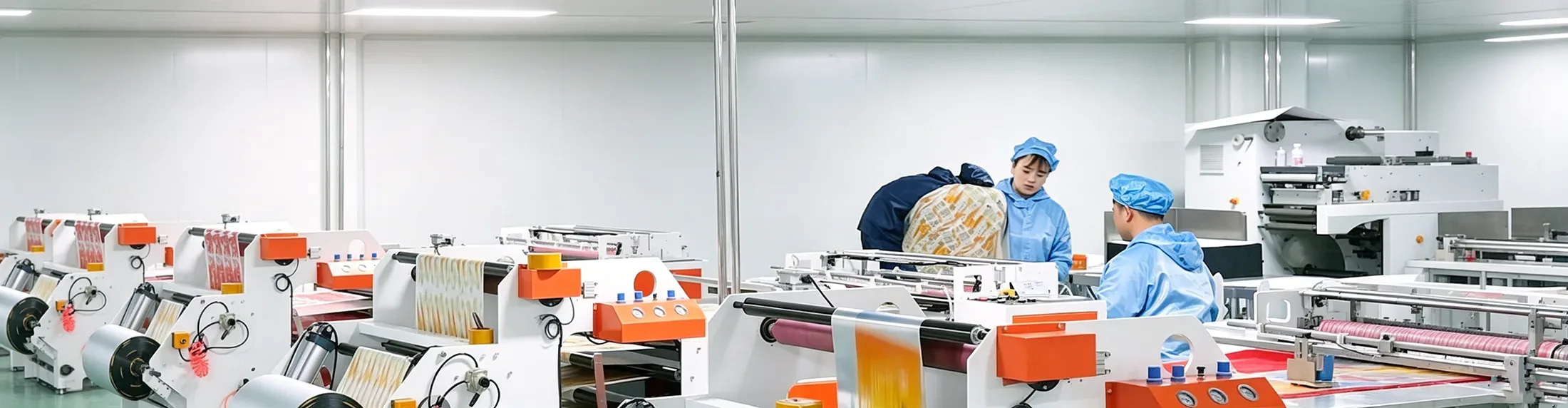
The new standards for the appearance and quality of IML food packaging.
With the upgrading of the food industry, consumers have higher demands for the safety, aesthetics and durability of food packaging. The shortcomings of traditional labeling and spraying packaging techniques have become increasingly prominent. Against this backdrop, the IML in-mold labeling technology, with its core advantages of integrated molding, safety and environmental friendliness, long-term wear resistance, has become the mainstream upgrading technology in the food packaging field. It is widely applied to various food-grade packaging products such as snack boxes, yogurt cups, preservation boxes, seasoning containers, beverage bottle caps, etc.
IML in-mold labeling, also known as in-mold decoration injection molding technology, works on the principle of precisely placing pre-printed and cured food-grade special film labels inside the injection mold. While the plastic undergoes high-temperature injection molding, the film and the packaging substrate are seamlessly fused and formed as one through high-temperature and high-pressure, eliminating the need for subsequent labeling, coating, spraying and other secondary processing procedures. This simplifies the production process and improves quality from the source. Compared with traditional packaging techniques, the food packaging-specific IML technology strictly follows food contact material safety standards. The used PET, PC films and environmentally friendly inks have all passed food-grade testing and do not release harmful substances. They are resistant to high temperatures, acids and alkalis, and fully meet the usage requirements for food storage, cold chain transportation, and high-temperature sterilization in all scenarios.
In terms of product quality, the IML packaging process has significant advantages. Firstly, it is safe, sterile, environmentally friendly, and features a fully integrated closed injection molding process. There is no secondary processing of glue or coatings, eliminating problems such as residual traditional labeling glue, delamination, and mold growth. It complies with the strict hygiene standards of the current food industry and is suitable for packaging of high-demand categories such as infant food, snack foods, and pre-prepared meals. Secondly, it is wear-resistant and scratch-resistant, and remains as new over time. The printing ink layer is encapsulated between the film and the plastic substrate, and a hardened surface layer forms a protective layer, effectively resisting scratches and color fading caused by transportation friction and daily wiping. This completely solves the pain points of traditional packaging labels falling off and blurred text. Thirdly, it has an exquisite appearance and high质感. It can achieve various visual effects such as gradient colors, high-definition patterns, frosted, and glossy surfaces. The color saturation is high and the three-dimensional layering is strong, helping food brands enhance product recognition and shelf appeal.
Meanwhile, this process has extremely strong production adaptability. The Food Packaging IML process is simple and efficient, allowing for quick changes in patterns, logos, and color schemes. It can meet the needs of brand new product iterations and customized packaging, balancing small-batch customization and large-scale mass production. It effectively reduces the post-processing costs and scrap rates of enterprises. Industry experts say that in the current era where food packaging safety supervision is becoming stricter and appearance standards are prevailing, the IML process for food packaging will continue to replace traditional processes and become the core technical support for the quality improvement and upgrading and differentiated competition in the food packaging industry.