

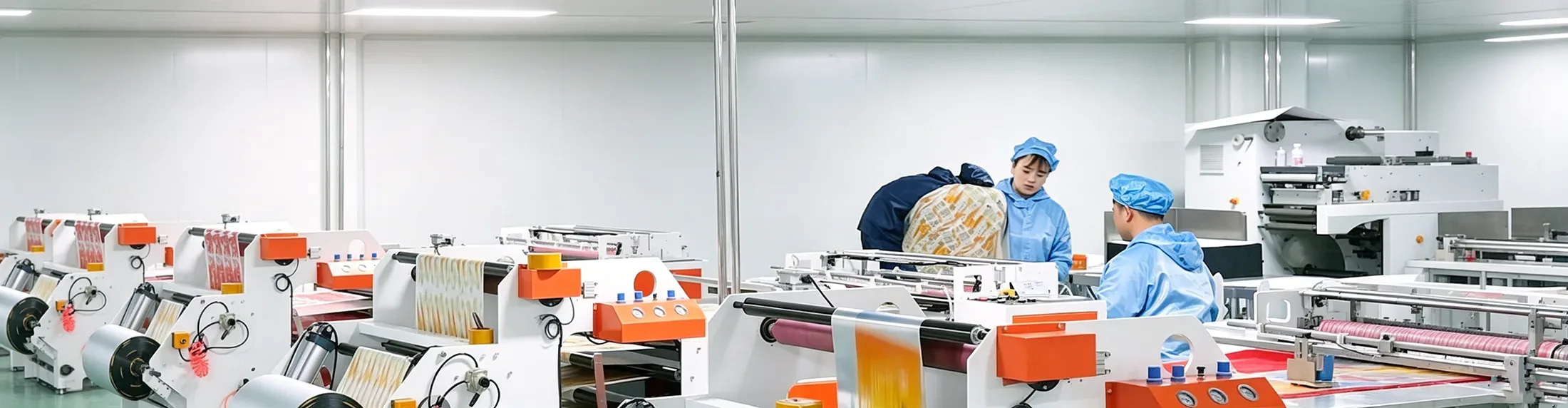
The manufacturing process and practicality of Tableware IML.
Tableware, as daily-use products that come into direct contact with food, must have safety, durability, and aesthetic appeal. Traditional plastic tableware often adopts post-processing silk-screening and labeling techniques, which have potential issues such as ink peeling, glue residue, poor wear resistance, and easy bacterial growth. These problems make it difficult to meet the high-quality usage requirements of households and the catering industry. The IML in-mold printing process specifically designed for tableware products is optimized for all types of plastic tableware products such as plates, soup bowls, water cups, chopstick boxes, children's tableware, and compartmentalized lunch boxes. With its food-grade safety attributes and excellent product performance, it has become the core trend of process innovation in the tableware industry.
Tableware IML Label strictly follows food contact safety standards. It uses food-grade PET and PC environmentally friendly films and non-toxic, environmentally friendly inks. All raw materials can pass authoritative food safety inspections. During production, the printed decorative film is placed in a dedicated precision mold and formed together with the tableware base through high-temperature injection molding. The ink layer is completely sealed between the film and the base, not directly contacting food or the human body. This completely eliminates the risks of ink peeling and the release of harmful substances, effectively solving the safety hazards of traditional printed tableware. At the same time, the integrated seamless forming structure ensures that the surface of the tableware has no joint gaps, no concave or convex dead corners, and is less likely to retain food residues or breed bacteria, which is more in line with catering hygiene standards.
In terms of product performance and appearance level, the Tableware IML Label process for tableware has particularly significant advantages. First, it is safe and long-lasting, suitable for all age groups, resistant to high temperatures and boiling, and can be adapted to daily use scenarios such as microwave heating and high-temperature disinfection. It is not affected by temperature changes and will not deform, fade, or release toxins. It is especially suitable for children's tableware, baby tableware, and other high-safety requirements categories. Second, it is super wear-resistant, durable. The surface hardened protective film resists friction and scratching, and daily cleaning, stacking, and friction will not cause scratches or pattern wear. It remains bright in color for a long time. Third, it has rich patterns and strong customization capabilities. It can achieve various high-definition printing effects such as cartoon patterns, simple pure colors, retro textures, and brand LOGOs. The colors are uniform and full, with strong three-dimensionality. It breaks the limited monotonous style of traditional plastic tableware and meets both household aesthetic needs and the customization requirements of catering brands and gift tableware. Fourth, it is environmentally friendly and cost-effective. It has no secondary processing pollution, efficient production process, low product scrap rate, and the finished product can be recycled and reused. It is in line with the current industry trend of green consumption and low-carbon production. Currently, more and more tableware brands are adopting the IML in-mold printing process to iterate their products, promoting the tableware industry to upgrade from basic practicality to safety, aesthetics, and high-quality aspects.